





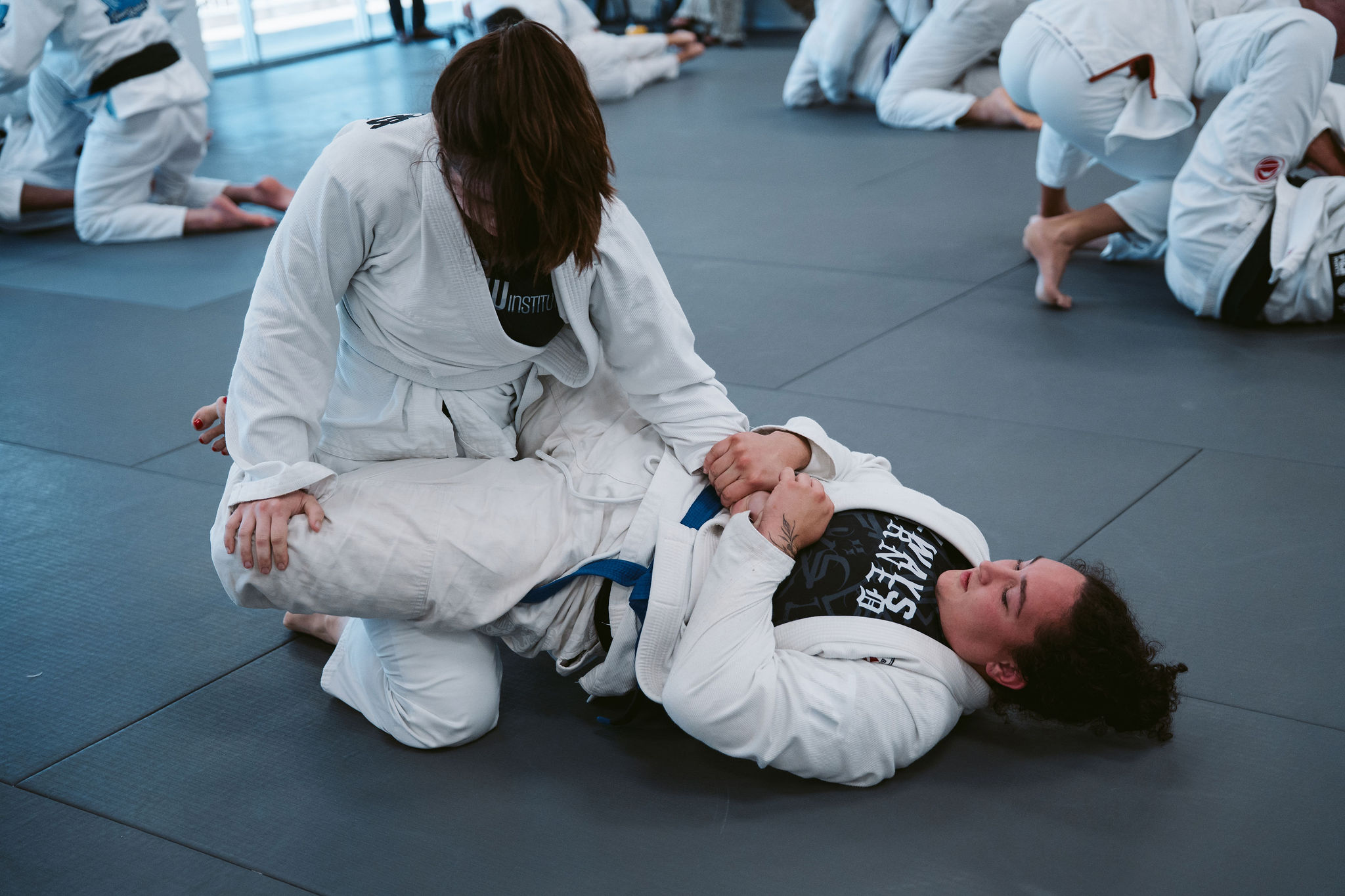
Starting jiu jitsu in a community as active and diverse as San Pedro can be exciting — but also overwhelming if you’re not familiar with the positions you see in class. Luckily, Brazilian jiu jitsu follows a clear positional structure. Once you understand the basic positions, everything else becomes easier: movement, defense, transitions, and eventually submissions.
Here is a beginner-friendly breakdown of the classic positions you’ll encounter at Six Blades San Pedro — and why each one matters for your progress.
Closed Guard — Learning Control From the Bottom
Closed guard is one of the first positions new students practice because it teaches the foundational concept of using technique instead of strength.
In closed guard, you’re on your back with your legs wrapped around your partner’s waist. This position teaches beginners how to:
- control posture
- break grips
- create angles
- transition into sweeps
- set up submissions
Closed guard gives San Pedro beginners confidence because it demonstrates a core truth of jiu jitsu:
Being on bottom is not the same as being defensive.
With the right technique, it can be one of the strongest attacking positions.
Open Guard — Developing Movement and Creativity
Once closed guard becomes comfortable, open guard introduces more movement. Here, your legs are used as flexible tools to manipulate distance and redirect pressure.
Open guard helps beginners learn:
- balance and foot placement
- grip coordination
- timing and redirection
- entries into sweeps
- defensive framing
Open guard is where many San Pedro students start discovering their personal style — whether they prefer movement, control, or long-distance guards.
Half Guard — Turning Defense Into Opportunity
Half guard is a key position where one of your legs is trapped between your partner’s legs. While it may look like a defensive spot, half guard can be incredibly powerful when used correctly.
Beginners learn to:
- build strong frames
- use underhooks
- block guard passes
- sweep their partner
- recover closed or open guard
Half guard teaches patience and strategic thinking — qualities that help students stay calm during challenging rolls.
Side Control — A Dominant Position With Clear Progression
Side control is one of the most dominant positions in all of jiu jitsu. When you secure side control, you pin your partner’s shoulders and hips, limiting their ability to move.
From side control, beginners practice:
- controlling hips and upper body
- applying steady pressure
- isolating arms
- transitioning to mount
- setting up kimuras, Americanas, and chokes
San Pedro students often enjoy learning this position because it provides a clear sense of stability and progress.
Mount — Control, Pressure, and Strong Submission Options
Mount places you on top of your partner’s torso with your knees on the ground. It’s a powerful position for attacks and a crucial position for beginners to understand both defensively and offensively.
From mount, students learn to:
- maintain strong base
- manage hip escapes
- stabilize pressure
- attack with chokes and arm locks
Understanding mount builds enormous confidence, especially for beginners who are learning how to stay composed under pressure.
Back Control — The Most Dominant Position in Jiu Jitsu
Back control is widely considered the strongest position in BJJ due to the attacker’s leverage and safety.
Beginners learn how to:
- secure seatbelt grips
- place hooks effectively
- maintain back control under movement
- finish with rear naked chokes or collar chokes
- stay balanced while attacking
This position helps San Pedro students develop coordination, patience, and precision — all key qualities for long-term growth.
Submissions — The Final Step After Earning Position
Submissions are exciting, but they only work reliably after positional control has been established. Beginners often try to jump straight to submissions, but the real power comes from understanding when and why they work.
Common beginner submissions include:
- rear naked choke
- armbar
- kimura
- Americana
- triangle
- collar chokes
The key principle students learn is simple:
Position → Control → Submission.
This principle makes jiu jitsu safer, smarter, and more strategic.
Helping San Pedro Beginners Build a Strong Foundation
At Six Blades San Pedro, learning the classic positions is about more than memorizing techniques. It’s about understanding how jiu jitsu works as a system. When beginners learn the positional roadmap, they become calmer, more confident, and better prepared to grow consistently.
New students quickly discover that jiu jitsu is:
- a problem-solving system
- a physical and mental challenge
- a community-driven experience
- a journey that rewards patience
- a practice that builds long-term confidence
By understanding the positions that matter, beginners feel less overwhelmed and more excited to take the next step on the mats.